20 GOOD REASONS FOR PICKING ELECTRICAL TESTING IN BIRMINGHAM
Top 10 Tips For Evaluating The Regulatory Compliance Of PAT in Birmingham
The UK regulatory framework for Portable Appliance Testing is fundamentally distinct from that of fixed electrical installations and fire safety equipment. Unlike fire-extinguisher maintenance, which is governed primarily by British Standards, and third-party certification programs, PAT tests are governed primarily by a health and security framework that emphasizes the duty of care, rather than a mandatory testing schedule. Electricity at Work Regulations of 1989 state that portable equipment and electrical systems must be maintained so as to prevent any danger. The Regulations don't specify the method or frequency of testing, nor how to achieve this maintenance. In this case, it is up to the dutyholder to perform a thorough and adequate risk assessment and determine an appropriate inspection and maintenance regime. Compliance can't be proven by just a bunch of test certificate. Instead, it must include a demonstrated process of decision-making based on risk, competent execution, and thorough documentation.
1. Electricity at Work Regulations of 1989
Regulation 4(2) (of the Electricity at Work Regulations of 1989) is at the core of compliance with PAT tests. It states, "As required to prevent danger, systems shall be kept in a condition to prevent this danger as far as reasonably possible." This places an absolute responsibility on employers to maintain all electrical equipment. The term “system” includes portable appliances. The regulations don't mention "PAT tests" in particular; instead, they require "maintenance," a concept that encompasses visual inspection, user check, and combined inspection and test. The frequency and type of maintenance required are determined by the risk assessment, not by a fixed legal timetable.
2. The Health and Safety at Work Act, 1974 Act 1974
The Health and Safety at Work, etc. The 1974 Act is the main legislation which establishes employers' general duties towards their employees and other people. The Act's Section 2 requires employers to take reasonable steps to ensure the health and safety of employees. Including electrical equipment in safe work systems and plants is part of this. Section 3 extends this duty to persons not in their employment, such as visitors, contractors, and members of the public. The PAT testing process is a key method of fulfilling these general duties by providing a structured approach to ensuring electrical equipment is safe.
3. Guidance and Best Practice: The IET Code of Practice for In-Service Inspection and Testing of Electrical Equipment
Although not law, the Institution of Engineering and Technology Code of Practice (IET Code of Practice) is universally recognized as the benchmark of best practice for PAT tests. It includes detailed instructions on how to implement a maintenance program that is compliant, including:
Definitions and classifications of appliances.
The detailed procedures for formal visual checks and combined inspections.
The equipment type, operating environment and recommended inspection and test frequencies will determine the initial frequency.
Test results must meet a pass/fail standard.
Courts and Health and Safety Executive inspectors (HSE), will use this code to judge if a dutyholder’s maintenance regime is “suitable and adequate.” A deviation from the code that is not accompanied by a documented and robust risk-based justification can be interpreted as non-compliance with the regulations.
4. Risk Assessment is the Priority
The HSE explicitly advocates a risk-based approach to PAT testing, moving away from the outdated concept of blanket annual testing for all equipment. Dutyholders must perform a risk analysis to determine the frequency, type, and need for inspection and testing. These factors are important in determining the outcome of this risk assessment.
Equipment type: In a low-risk, double-insulated environment (Class II), a Class II appliance may only require a visual inspection. However, a Class 1 appliance in a workshop might need to undergo regular formal testing.
Environment: Construction sites, warehouses, and workshops are high-risk environments. Offices and hotels are generally lower risk.
Users: Is the person using equipment a member of your staff?
Are you familiar with the appliance’s past history?
A compliant system is defined by this risk assessment, not by the volume of tests conducted.
5. The Concept of Competence for Testers
Regulation 16 (Electricity at Work Regulations, 1989) requires that all persons working on electrical systems possess the necessary knowledge and experience in order to avoid any danger. In PAT tests, "competence", does not always require formal qualification. However, the tester must possess:
Adequate knowledge of electricity.
Practical experience and understanding of the system they are working on.
Understand the risks and precautions that are required.
Ability to correctly interpret and use test results.
City & Guilds' 2377 qualification is a very popular qualification, and it provides an excellent education. But competence can also be attained through other means. The dutyholder has to be able demonstrate that the individual conducting the test is competent.
6. Documentation and Record-Keeping Requirements
The Electricity at Work Regulations don't require the keeping of records. Regulation 29 says that it's a defense to prove you did everything possible and took due diligence in order to avoid the offence. The primary proof of due diligence is comprehensive records. Compliant record keeping should include:
A register of assets for equipment.
Record of the risk assessment, and the maintenance plan that results.
Reports for each inspection and test including the appliance description, results of tests, pass/fail status and date of next testing.
HSE and local authorities are entitled to inspect the records.
7. Labeling and Identification of Appliances
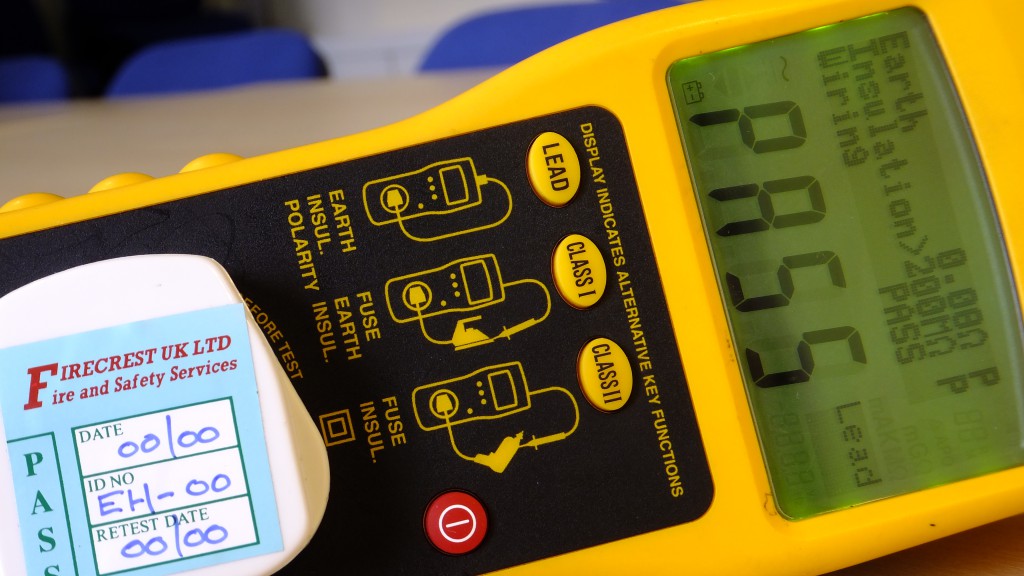
Effective labelling is a critical part of a compliant PAT system. Each appliance which has undergone an official combined inspection/test should be labelled:
A unique asset number that identifies it with the record.
Date of the test
The date for your next test.
The name or identifier used to identify the tester.
Labels provide a clear visual indication of an appliance’s compliance for both inspectors and users. Labels need to be durable, not metallic, and not conductive.
8. The HSE Enforcement Policy and "Mythbusting"
The HSE has worked actively to clear up misconceptions regarding PAT testing. The HSE emphasizes that:
No law requires that all equipment be tested annually.
If a business has qualified staff, it can perform its own testing. It's not required to use a contractor.
Visual inspections can be used to identify many faults and are more reliable than electronic tests.
An enforcement officer is likely to look for an approach that takes into account risk. An enforcement officer may view a company less favorably if it tests all equipment blindly every year, without supporting risk assessments.
9. Interaction of PUWER with Other Legislation
The Provision and Use of Work Equipment Regulations 1998 (PUWER) also applies to portable appliances. PUWER demands that work equipment is suitable for its intended uses, maintained to a safe level, and inspected in order to ensure it's safe. Regulation 6 specifies that inspections are necessary when the safety of electrical work equipment is affected by installation conditions. PAT testing is a way to fulfill PUWER’s maintenance and inspection requirements of electrical equipment.
10. Due Diligence and Insurance Implications
Insurance companies may have different requirements. As a condition to coverage, an insurance policy could stipulate that PATs are conducted by a third party annually. If this condition is not met, it could invalidate any claim. Moreover, in the case of an electrical event, the dutyholder’s records for PAT tests and risk assessment are the first documents that insurers and HSE officials will scrutinize. A documented, risk-based approach is the best possible proof of due diligence. It also provides a strong defence against prosecution and invalidated insurance claims. See the recommended Birmingham portable appliance testing for website info including extinguisher testing, extinguisher testing, all about fire extinguisher, fire electrical extinguisher, all about fire extinguisher, testing a fire extinguisher, fire extinguisher servicing, electrical fire, fire extinguisher testing, fire extinguisher fire extinguisher and more..
Ten Tips For The Best Places To Service Fire Extinguishers in Birmingham
The geographic Birmingham and the coverage offered by the provider of your fire extinguisher will affect the quality, reliability, and cost of service. In the UK, in which the Regulatory Reform Order (Fire Safety) 2005 demands constant and prompt maintenance of fire extinguishers a provider’s physical presence and their logistics capabilities directly impact their ability to fulfill their contractual and legal obligations. In deciding between a company with a large geographic reach and a local expert who has a deep understanding of the area it is important to consider response times and travel costs. It is also important to take into account cultural understanding and regional compliance. A provider's operational footprint–their depot Birminghams, engineer distribution, and territory management–determines whether they can offer genuine rapid response or merely theoretical coverage, making this a critical factor in ensuring your premises remain protected and compliant without suffering from excessive downtime or hidden charges related to geographic constraints.
1. National Vs. Local Provider Operational Models
The UK market has large national companies that have extensive networks and smaller, localised experts. National companies typically operate regional depots with a network of distributed engineers. They offer the same brand name and resources for large multi-site contracts. They are scalable, as are often robust backup systems. Local providers can provide a quick response within their area of operation, in addition to a better comprehension of the region they serve (e.g. Southeast Scotland). They also offer customised services. It's crucial to determine if a national provider is truly effective in your particular area or if you're at the very edge of their coverage. This could mean a delays in response times and increased cost of mileage.
2. Engineer Density and Proximity Your Postcode
To ensure that your service is delivered in a timely manner, the closest engineer who is permanently based and fully equipped for your site is crucial. The company may claim that they cover the UK however it's useless if its nearest engineer is located two hours away. You must be asking "Where is the nearest engineer to our area?" How many engineers do I have within my geographic area? In areas with high density engineers are more likely to be available for emergency situations and reduce travel time and cancel appointments less often because of delays.
3. The policy regarding mileage and call-out fees in Birmingham
The mileage policies directly affect cost. A transparent supplier will provide a quote that clearly outlines their mileage policy. A lot of them offer a certain amount of "free" miles from the engineering base or local depot. Over this threshold a fee per mile will be charged. These costs can be significant for premises situated in remote or rural regions (e.g. rural Wales, Scottish Highlands). This is why it's important to obtain an estimate in writing that is based on the precise Birmingham of your business. Certain local companies may offer no mileage fees within their primary county and offer a price advantage for companies operating in that particular area.
4. Regional Compliance Nuances and Regulations
While the core fire safety legislation is consistent throughout Great Britain, there are distinct differences. England and Wales are governed by the Regulatory Reform (Fire Safety) Order 2005. Scotland is governed by the Fire (Scotland) Act 2005 and the associated regulations, which could have minor differences in enforcement emphasis and the documentation. Northern Ireland operates under its own legislation. These providers will have office staff and engineers who are knowledgeable and skilled in regional particulars.
5. Multi-Site Contract Management with National Account Coordination in Birmingham
A provider's capability to offer an unhindered coordination of accounts across the country is vital for companies with multiple Birminghams in the UK. Centralised account managers working with the regional engineers is needed for this to happen. The provider should present an efficient platform for scheduling and communications that ensures the same service, a uniform pricing, and a unified report, all through one point of contact, regardless of whether your Birminghams are situated in London. Manchester. or Glasgow. The headache of administrative management of managing multiple local contracts is removed.
6. Warehouse and Depot Infrastructure in Birmingham
Physical infrastructure is an indicator of the quality of service. Local depots are not just administrative offices; they are essential logistics hubs that stock replacement extinguishers, parts, and other consumables. A well-stocked local depot allows engineers to replenish their supplies quickly, which allows them to resolve most issues on the first visit. Engineers may not have the parts they need if a provider is covering your area, but their closest warehouse might be hundreds of miles away. This could lead to delays and multiple visits for basic tasks.
7. Planning for the worst, and the possibility of redundancy for engineers in Birmingham
A solid coverage depends on contingency plans in case of illness or annual leave, or an unexpected demand. If your provider has thin coverage, they could have one engineer responsible for a vast geographic area. If that person is unavailable the scheduled service could be delayed or cancelled due to an engineer who is traveling from a great distance and could affect the quality of service. In contrast, a provider that has multiple engineers within the same region is equipped with redundancy. This ensures continuity of service, and will safeguard you from any compliance gaps that may arise due to their internal resource concerns.
8. Urban vs. Rural Service Challenges
The practicalities of servicing differ dramatically between urban and rural places. In Central London, servicing a building involves challenges such as congestion charges, ULEZs for vans compliance and a small parking. All of these can make it more expensive and complicated scheduling. Rural Birminghams are more difficult to serve due to long travel time and the remote access. Also, there may be a lack of mobile connectivity, which could make it difficult for engineers to check their status. Providers with experience in the specific Birmingham in which you reside will have protocols and pricing specifically designed to address these challenges.
9. Verification of claims for coverage through reference numbers from clients in Birmingham
The marketing materials of a company might make claims of vast coverage. This must be verified. The most effective way to verify this is to request customer references in your particular city or region. If you ask a local company similar to yours regarding the service they received will give you a good idea of what the service is like. Did they respond quickly? Did the engineer come local to your area? There were unexpected mileage costs? This due diligence gives actual evidence to back (or challenge) the provider's claimed capabilities in your area.
10. Contractual Guarantees tied to the performance of the Geographical in Birmingham
Final note that any guarantees of coverage should be backed by the terms of the contract. The Service Level Agreement (SLA) should also include geographic performance metrics. For instance, it can assure that a scheduled service will be performed by an engineer located within a specific radius, or that a call-out in an emergency will be responded to from an appropriate local depot within a certain time. This formalises coverage claims by the service provider and permits you to take action if the actual performance or availability of the provider does not match their promises. See the recommended Birmingham fire extinguisher service for blog advice including fire extinguisher fire extinguisher, fire extinguisher, fire extinguisher fire extinguisher, fire extinguisher for an electrical fire, fire extinguisher using, fire extinguisher using, fire extinguisher fire extinguisher, a fire extinguisher, fire service, fire extinguisher service near me and more. More broadly, see the top electrical equipment testing for more.